
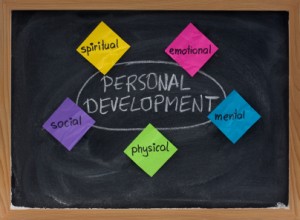
 Previously, we raised the idea that health is actually part of the larger conversation about leadership. If you aren’t at an optimum level of health you aren’t performing your best. We also raised the idea that there are multiple dimensions of health – mental, emotional, spiritual and of course, physical, (and there are even more). We wrote about the physical dimension and this week we want to go into the mental/emotional realm. These two are often collapsed together and there is no doubt they are inextricably linked. The term “mental health” often refers to our ability to handle our reactions to the circumstances and challenges that come up in our lives. In fact, the dictionary defines it as “psychological well-being and satisfactory adjustment to society and to the ordinary demands of life.” For the purposes of this post we are going to separate the two terms and define them a bit differently. When we talk about “mental health,” what we are pointing to is “intellectual health” – meaning
 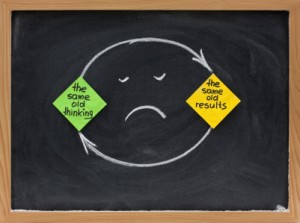 how healthy and fresh are your thought processes? When was the last time you challenged yourself to learn something new? How much are you reading? (And not reports and emails! Reading fiction for fun, or non-fiction topics that interest you?) Do you do puzzles – crossword or otherwise - to stimulate your cognitive abilities? We often repeat the same thought patterns and think about the same subjects day in and day out. Learning something new helps keep your brain healthy and your perspective fresh. For more information on how to keep your brain and thinking healthy visit www.drweil.com and search the database.
When we talk about emotional health we are talking about how you are feeling about your life and the people and activities in it. Are you experiencing joy and satisfaction? Are you having fun? Do you relax? These days most of the people we speak with say “no.” Very few people seem to feel they have time for fun or relaxation. The thing is, if you don’t give yourself a chance to relax and unwind the constant stress is very hard on your body. There is lots of research about the effects of continuous stress on our systems. It’s important to have fun – for your health. If time keeps slipping by, try scheduling it in regularly as a mandatory on your calendar. Make sure you are actually “cutting loose” – play a musical instrument, practice martial arts, go horseback riding – something that truly turns off your typical daily thought patterns and redirects your attention to something that is refreshing.
how healthy and fresh are your thought processes? When was the last time you challenged yourself to learn something new? How much are you reading? (And not reports and emails! Reading fiction for fun, or non-fiction topics that interest you?) Do you do puzzles – crossword or otherwise - to stimulate your cognitive abilities? We often repeat the same thought patterns and think about the same subjects day in and day out. Learning something new helps keep your brain healthy and your perspective fresh. For more information on how to keep your brain and thinking healthy visit www.drweil.com and search the database.
When we talk about emotional health we are talking about how you are feeling about your life and the people and activities in it. Are you experiencing joy and satisfaction? Are you having fun? Do you relax? These days most of the people we speak with say “no.” Very few people seem to feel they have time for fun or relaxation. The thing is, if you don’t give yourself a chance to relax and unwind the constant stress is very hard on your body. There is lots of research about the effects of continuous stress on our systems. It’s important to have fun – for your health. If time keeps slipping by, try scheduling it in regularly as a mandatory on your calendar. Make sure you are actually “cutting loose” – play a musical instrument, practice martial arts, go horseback riding – something that truly turns off your typical daily thought patterns and redirects your attention to something that is refreshing.
Take some time to reflect and evaluate how well you are handling your current levels of stress. If you find that you aren’t as resilient as you would like to be and if stress and circumstances are bringing you down, get support! If you find there are painful incidents in your past that have a tight grip consider seeking some type of counseling. If you are most comfortable with a faith-based approach speak to your minister, spiritual director or trusted spiritual advisor. You may also find a certified psychological professional is best.
 If you find you are having trouble finding your passion, designing a future you are excited about or reaching particular goals and dreams then hire a coach. Ask around and find someone who has an approach you are excited about pursuing. Partner with your coach so that you have the support you need to get where you want to go.
The healthier you are physically, the better you will feel mentally/emotionally and vice versa. It’s all interconnected so do yourself, your organization, your family and friends a favor and take action to insure your health is optimized!
 There are many dimensions of health including: mental, emotional, spiritual, physical, environmental and more. It’s pretty self-evident that the healthier you are, the better you can perform. Performance is foundational to leadership yet health is rarely part of the leadership conversation. If anything, as researcher Brene Brown says, being run down from exhaustion has become a "status symbol." Although people may admire your tenacity and commitment, being exhausted is not a healthy state and it's unlikely you are performing optimally.
 er day, (8 ounce glasses that is). Yet how many of us do it? If you can just do this piece, your health will be improved simply because you will be hydrated. Don’t like plain water? Squeeze half a lemon or lime in it. Still not good? A splash of cranberry or pomegranate juice has health benefits and helps with the taste, (provided you are doing just a splash and you are doing real juice, not the high sugar filled kind.) The basics are covered in the works of Dr. Weil and Dr. Oz we mentioned above and being hydrated is one example of improving your health without feeling like you are taking hours out of your day for a huge program.
 To move into a New Year powerfully and to create the results you want there are some key steps to take. The first is creating an “elegant ending” to the past. Last week we posted about “
 How bold are you willing to be setting your goals? If you are completely certain you can make the goals are you stretching yourself enough? Focus on designing the most catalytic, highly leveraged action steps you can. By “catalytic” we mean that your actions produce the intended results without your being used up in the process. By “highly leveraged,” we mean you produce very big results with minimal resources.
 It’s the time of year when many of us conduct annual rituals that may include everything from strategic planning sessions for business to making New Year’s resolutions or setting Bold Goals for 2012 and beyond. We’ve found any such process to be much harder to do when we haven’t completed and let go of the past. It’s very difficult, (impossible?), to really move forward when we are carting the past along with us. The process of letting go can include changing your attitude and perceptions about what the economy did to you, to digging very deep and letting go of some of the childhood stuff that shapes your life.
On the fun end of the spectrum, we have for many years put flip chart paper all over our walls when we have a New Year’s Eve party with a simple question on each, such as “What did I start and not complete?” or “What did I accomplish that I haven’t been acknowledged for?” or “What did I screw up that I didn’t get caught for?” Guests write on the charts all evening with colored markers and sometimes get even more creative with a touch of artistic display as well. On a number of occasions we have taken them all down at midnight and symbolically burned them.
It’s the time of year when many of us conduct annual rituals that may include everything from strategic planning sessions for business to making New Year’s resolutions or setting Bold Goals for 2012 and beyond. We’ve found any such process to be much harder to do when we haven’t completed and let go of the past. It’s very difficult, (impossible?), to really move forward when we are carting the past along with us. The process of letting go can include changing your attitude and perceptions about what the economy did to you, to digging very deep and letting go of some of the childhood stuff that shapes your life.
On the fun end of the spectrum, we have for many years put flip chart paper all over our walls when we have a New Year’s Eve party with a simple question on each, such as “What did I start and not complete?” or “What did I accomplish that I haven’t been acknowledged for?” or “What did I screw up that I didn’t get caught for?” Guests write on the charts all evening with colored markers and sometimes get even more creative with a touch of artistic display as well. On a number of occasions we have taken them all down at midnight and symbolically burned them.
 Now ask “what’s missing today from my vision today that would be the most valuable thing I could put my attention on?” “What, if I/we got to work on it would give us the greatest leverage in fulfilling the vision?” By leverage we mean getting the greatest result for the least effort and investment of resources. Pick one, and no more than three, activities and build time into your calendar for them. Share your new focus with others so that they ask you how you are doing. They may even look to see how they can support you! That’s real accountability – holding yourself accountable in a public way through your declarations.
 For the last 4 years or so we have developed a set of ideas we call Lean Conversations. The fundamental notion is that academicians, consultants, leaders, and managers in our culture have focused on and accomplished tremendous gains in productivity through process improvement, supply chain management, IT, and a host of manufacturing concepts including Lean Manufacturing. The area that has been largely overlooked as an opportunity for improvement in productivity is the friction and waste that occurs in the conversations people have with each other as they go about their daily work together. By friction and waste we mean the upsets, resistance, broken promises, undelivered communications, failed intentions, etc., etc. (You get the picture.)
We have long believed the single biggest key to productivity gains in our economy today is to identify and clear upsets, first in ourselves, and then in others. Over many years with our clients we have conducted a sort of “informal qualitative survey,” by asking them, “ if people in your organization just came to work, did their jobs, and went home without having upsets, issues with each other, their work, etcetera, what time could you go home?” Consistently we would hear they could go home between 10:30 and 11:00 a.m. This answer used to surprise us until we heard it over and over
For the last 4 years or so we have developed a set of ideas we call Lean Conversations. The fundamental notion is that academicians, consultants, leaders, and managers in our culture have focused on and accomplished tremendous gains in productivity through process improvement, supply chain management, IT, and a host of manufacturing concepts including Lean Manufacturing. The area that has been largely overlooked as an opportunity for improvement in productivity is the friction and waste that occurs in the conversations people have with each other as they go about their daily work together. By friction and waste we mean the upsets, resistance, broken promises, undelivered communications, failed intentions, etc., etc. (You get the picture.)
We have long believed the single biggest key to productivity gains in our economy today is to identify and clear upsets, first in ourselves, and then in others. Over many years with our clients we have conducted a sort of “informal qualitative survey,” by asking them, “ if people in your organization just came to work, did their jobs, and went home without having upsets, issues with each other, their work, etcetera, what time could you go home?” Consistently we would hear they could go home between 10:30 and 11:00 a.m. This answer used to surprise us until we heard it over and over  again. Let’s allow for gross overstatement and cut that savings in half. Even with this modification it appears there is at least two to four hours of time savings available for the leaders, (and presumably everyone else in the organization), if there were less upsets, less confusion and fewer issues in people’s interactions with each other. Bottom line, this means ther are potentially enormous opportunities for gains in productivity right in front of us, largely unnoticed, (or framed in that way), and largely unleveraged.
 The term “comfort zone” has become a popular way to describe how we are feeling about various activities we are taking part in – “that pushed me way out of my comfort zone,” or “that was not in my comfort zone,” are pretty common phrases these days.
When we talk about our “comfort zone” what we are talking about is our personal orbit, our range of personal activities. Each of us has a daily routine, a weekly routine and perhaps even a monthly or yearly routine. Generally speaking we are creatures of habit and we develop comfort zones we like, and of course, feel comfortable in.
The term “comfort zone” has become a popular way to describe how we are feeling about various activities we are taking part in – “that pushed me way out of my comfort zone,” or “that was not in my comfort zone,” are pretty common phrases these days.
When we talk about our “comfort zone” what we are talking about is our personal orbit, our range of personal activities. Each of us has a daily routine, a weekly routine and perhaps even a monthly or yearly routine. Generally speaking we are creatures of habit and we develop comfort zones we like, and of course, feel comfortable in. As we discuss comfort zones, set points, etc. we want to be clear that this is not a piece about people who plod along and move slowly or people who seem risk averse. If you are a fast-paced, “go go go” type of person that is your comfort zone. What if you had to slow down, be more reflective, bring your energy “down and in” instead of being an “up and out” kind of person? What if you had to take on a meditation practice? Would you still be in your comfort zone? What if you are a thrill seeker and look for ways to “push the envelope” all the time? What would happen if you lived a more mundane existence and had to experience the ordinary? Would you still be in your comfort zone?
 Have you ever wondered whether there is any common language that exists for all humans and, if so, how knowing about that language might help you be a more effective as a leader? Well, there is and researchers have called it “deep metaphors.”
In the November/December 2008 issue of
Have you ever wondered whether there is any common language that exists for all humans and, if so, how knowing about that language might help you be a more effective as a leader? Well, there is and researchers have called it “deep metaphors.”
In the November/December 2008 issue of  Awhile ago I was forwarded an email written by Shama Kabani. [She runs an
  ing CEO membership organization and I have worked with them for more than 16 years. I can say the 5 insights offered by Kinsey below are very consistent with my experience of the CEO population. Here they are with notes from me included.
 Being powerful in translating intentions into reality and sustaining them requires presence and adaptability in the face of life’s circumstances – circumstances that can change every moment. Where can we turn for tools to support ourselves?
The United States military has long taught our special ops teams and fighter pilots a thought process called the OODA Loop. These teams function in relatively small units who have large assignments with very limited time and resources. They train incessantly and plan their missions in incredible detail. Yet, no plan survives its collision with reality and conditions in the field often differ from those on the planning table.
Being powerful in translating intentions into reality and sustaining them requires presence and adaptability in the face of life’s circumstances – circumstances that can change every moment. Where can we turn for tools to support ourselves?
The United States military has long taught our special ops teams and fighter pilots a thought process called the OODA Loop. These teams function in relatively small units who have large assignments with very limited time and resources. They train incessantly and plan their missions in incredible detail. Yet, no plan survives its collision with reality and conditions in the field often differ from those on the planning table.
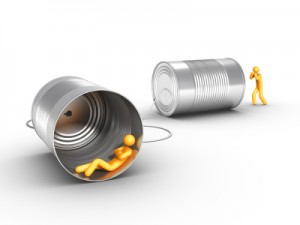 Let's talk about a set of ideas we have been evolving for several years that we call Lean Conversations. The fundamental notion is that academicians, consultants, leaders, and managers in our culture have focused on and accomplished tremendous gains in productivity through process improvement, supply chain management, IT, and a host of manufacturing concepts including Lean Manufacturing. The area that has been largely overlooked as an opportunity for improvement in productivity is the friction and waste that occurs in the conversations people have with each other as they go about their daily work together. By friction and waste we mean the upsets, resistance, broken promises, undelivered communications, failed intentions, etc., etc. (You get the picture.)
We have long believed
Let's talk about a set of ideas we have been evolving for several years that we call Lean Conversations. The fundamental notion is that academicians, consultants, leaders, and managers in our culture have focused on and accomplished tremendous gains in productivity through process improvement, supply chain management, IT, and a host of manufacturing concepts including Lean Manufacturing. The area that has been largely overlooked as an opportunity for improvement in productivity is the friction and waste that occurs in the conversations people have with each other as they go about their daily work together. By friction and waste we mean the upsets, resistance, broken promises, undelivered communications, failed intentions, etc., etc. (You get the picture.)
We have long believed  In a Wall Street Journal article, “
 Fast forward back to today with this historical perspective and we can see that everything we take for granted as we do business today was originally invented by someone to facilitate trade, which in turn was driven by thousands of entrepreneurs in all regions where they were allowed to operate and were not taxed out of existence. Modern management is just a relatively late development to solve the “recent” problems of large operations scattered over great geographic areas and allow them to continue to facilitate trade and lower its cost. Much of the value of that management has been in gathering, organizing, and dispensing information needed by large numbers of people in far-flung operations to get their work done and make the transactions happen.
 In mid-December we wrote one of our year end, "get ready for next year" blog posts called, "
 What excited me about the article were the studies that show that, “the more unexpected something is, the more conscious we are of it.” Your brain has to work harder when what shows up doesn’t match prediction, or expectation. What this means to me is that the most highly leveraged way to get yourself and your team in to powerful action is to start throwing new stuff in front of your collective brains. Create a BOLD vision that you can’t prove based on the past. You will be stimulated, more conscious, and therefore more present. You will be unleashing creativity instead of invoking your past experience, circumstances, knowledge, (or lack of it), and limitations.
 “If you expect performance, then make it [meaning your expectations] ’acutely clear’ so people have the opportunity to succeed.” -- Jim Moats
A very thoughtful leader, friend, and fellow
“If you expect performance, then make it [meaning your expectations] ’acutely clear’ so people have the opportunity to succeed.” -- Jim Moats
A very thoughtful leader, friend, and fellow  Being 'acutely clear,' (as Jim Moats describes), and in partnership with those around you, puts you in what we call in our book "
 On a recent evening in a beach bar on a quiet bay in the Grenadines where our sailboat was anchored for the night, I met a gentle soul named Alvin who was native born and raised on the island. Despite the idyllic setting, Alvin was a troubled man. On the surface, he had little education, jobs are scarce, and he is in a desperate struggle financially. For many of us, that would be enough to cause us to give up. However, Alvin's troubles ran even deeper.
Alvin said he longed for connection and conversation. He said his own people are very "contentious" with each other, leaving little- to-no room for meaningful relationships. His observation was so sincere and heartfelt that it "hooked me." I've been thinking about it ever since. How many times do I hear people say in meetings, "I disagree with that..." “You’re wrong about that…” or “You’re confused…” as if that approach was useful rather than instantly causing disconnection and the need to defend oneself.
On a recent evening in a beach bar on a quiet bay in the Grenadines where our sailboat was anchored for the night, I met a gentle soul named Alvin who was native born and raised on the island. Despite the idyllic setting, Alvin was a troubled man. On the surface, he had little education, jobs are scarce, and he is in a desperate struggle financially. For many of us, that would be enough to cause us to give up. However, Alvin's troubles ran even deeper.
Alvin said he longed for connection and conversation. He said his own people are very "contentious" with each other, leaving little- to-no room for meaningful relationships. His observation was so sincere and heartfelt that it "hooked me." I've been thinking about it ever since. How many times do I hear people say in meetings, "I disagree with that..." “You’re wrong about that…” or “You’re confused…” as if that approach was useful rather than instantly causing disconnection and the need to defend oneself.  This week we are leading a customized version of our
  Most of the time when consultants, coaches or other “outside interventions” are tapped by leaders of organizations it’s because there is some type of crisis or turning point. Usually “the pain” has become high and the solutions to the issues just aren’t apparent to leadership. There are various causes of business pain, but the one we are going to focus on today is a common one. It is some variation of “go fix my people.” There is often a perception issues are being caused by an individual, several individuals, a department or team.
Underneath it all, particularly within owner-entrepreneur types of environments, there is a very particular bottom line and let’s cut right to it. Owner/entrepreneurs work the way they work because they like it. It’s working for them. What “the pain” is almost always about is that the way they are working, is not creating the results they want and they don’t like it. However, the request is “go fix the other people!” Ultimately, so the owner/entrepreneur can continue with their patterns and approach without having to shift themselves. Sometimes, depending on how urgent the “pain” is, leaders will shift, but inevitably, the minute there is enough breathing room, they snap back to their previous ways. Just as inevitably, the patterns that don’t work for the business, (but work on a personal level for the leader), are back, and soon enough, the “pain” is back.
Most of the time when consultants, coaches or other “outside interventions” are tapped by leaders of organizations it’s because there is some type of crisis or turning point. Usually “the pain” has become high and the solutions to the issues just aren’t apparent to leadership. There are various causes of business pain, but the one we are going to focus on today is a common one. It is some variation of “go fix my people.” There is often a perception issues are being caused by an individual, several individuals, a department or team.
Underneath it all, particularly within owner-entrepreneur types of environments, there is a very particular bottom line and let’s cut right to it. Owner/entrepreneurs work the way they work because they like it. It’s working for them. What “the pain” is almost always about is that the way they are working, is not creating the results they want and they don’t like it. However, the request is “go fix the other people!” Ultimately, so the owner/entrepreneur can continue with their patterns and approach without having to shift themselves. Sometimes, depending on how urgent the “pain” is, leaders will shift, but inevitably, the minute there is enough breathing room, they snap back to their previous ways. Just as inevitably, the patterns that don’t work for the business, (but work on a personal level for the leader), are back, and soon enough, the “pain” is back.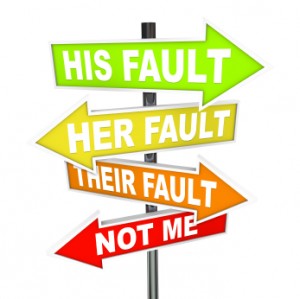 Change is possible and change takes work. Whether a leader changes or not, energy is being expended. It takes energy to keep patterns in place when they aren’t working and there is a state of resistance. We call that ‘friction and waste,’ a subject we address in our blog posts on Lean Thinking. It takes energy to make changes. There is a cost either way. The question is - where does a leader “pay up?”
 First, let's look at what we can learn from Lady Gaga. Given her phenomenal success there are many ways we could analyze her. She and her team have been masters of social media and reinventing how pop music is marketed. She is arguably the number one pop star in the world. Rather than evaluate her business approach we want to focus on how she has truly tapped into a community - her fans that she lovingly refers to as “my little monsters.” She has cast herself as someone who was lonely and felt isolated growing up, but as it turns out, she was just a misunderstood brilliant artist and her fans are too. So “monster” references their “outsider status.” She connects with her fans as also being wonderful outsiders and calls herself “mama monster.” Here is just a sample of the lyrics from her latest hit, “
 Back in the 1950’s, homogeneity was celebrated - “The Man In The Grey Flannel Suit.” The IBM salesman with the dark suit and black horn rimmed glasses, whether he needed them or not - the more similar and “cookie cutter” the better. If you are from the generation that grew up with “Leave it to Beaver,” you may still have fond memories of that reality. The thing is, the pendulum is swinging and it hasn’t maxed out yet. The younger generations are celebrating diversity, self-expression, and being an individual.
 Ok I’m really on a roll with the